Students at Shrub Oak International School recently explored the building blocks of life through a hands-on science experiment that demonstrated how DNA can be extracted from a simple strawberry. The classroom project provided a clear and engaging way for students to observe genetics in action while developing practical laboratory skills.
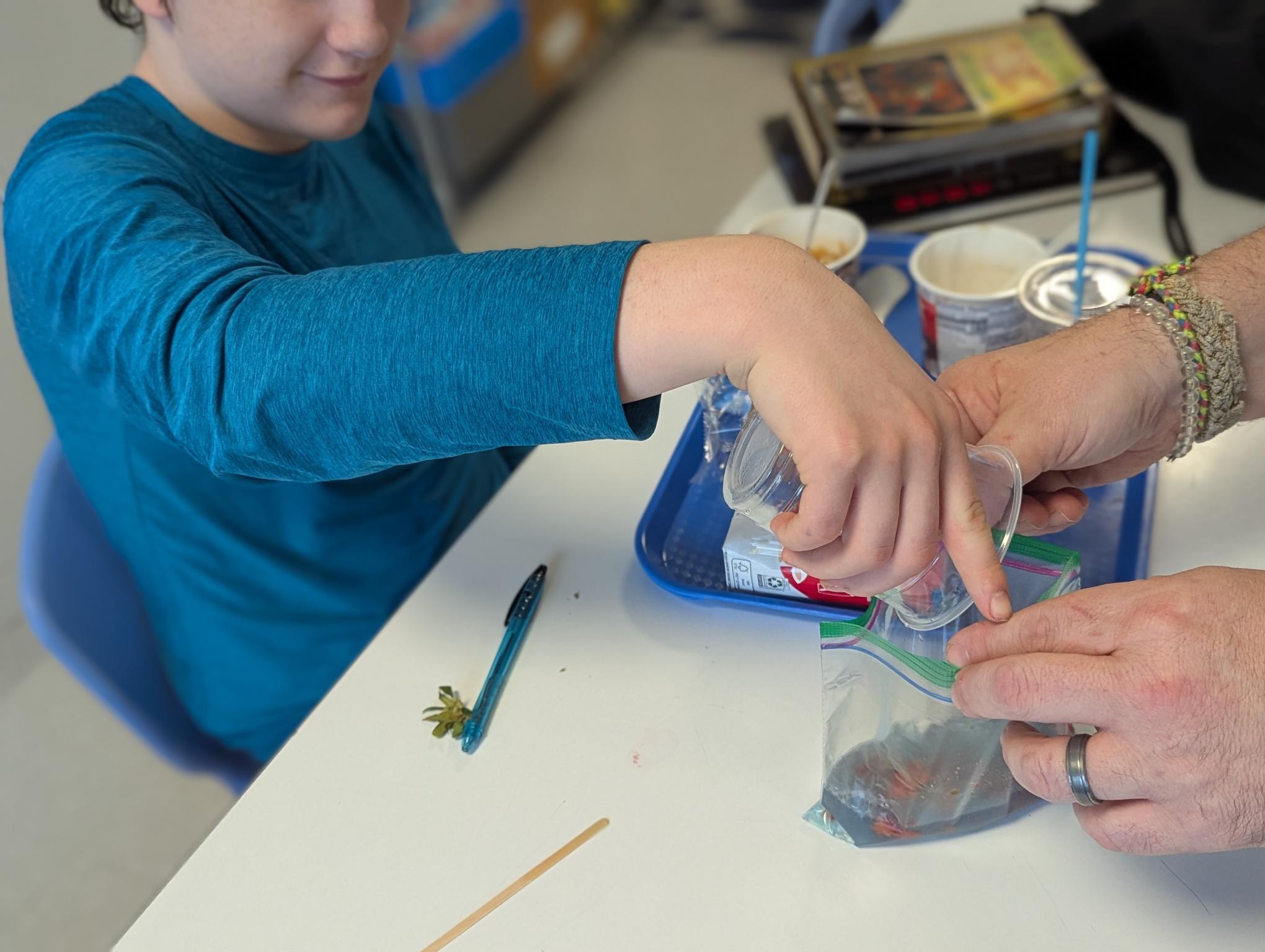
During the lesson, students worked step-by-step to isolate DNA from strawberries using common household materials and basic scientific techniques. The activity began with students placing strawberries into plastic bags and carefully mashing them. This process helped break down the fruit’s tissue and release the cells inside. Students then added a specially prepared extraction solution containing water, salt, and dish soap. The mixture works to break open the cell membranes and nuclear membranes where DNA is stored.
After thoroughly mixing the solution with the mashed strawberries, students filtered the mixture through a strainer to remove the solid pieces of fruit. The remaining liquid contained dissolved cellular components, including DNA. The most exciting moment of the experiment came when cold alcohol was slowly poured into the solution. Because DNA is not soluble in alcohol, it began to separate from the liquid and form visible strands.
Students watched with excitement as cloudy white fibers appeared in the container. Using wooden sticks, they carefully lifted the strands of DNA from the solution, observing the genetic material that is normally far too small to see without specialized equipment. For many students, this was their first opportunity to directly observe DNA, making the abstract concept of genetics more tangible.
Strawberries are particularly well suited for DNA extraction experiments because of their unique genetic structure. Unlike humans, who have two sets of chromosomes, strawberries contain eight sets of chromosomes in each cell. This means that strawberries hold a large amount of DNA, making it easier to extract and see with the naked eye. In addition, strawberries are soft fruits that can be easily broken down during the mashing stage of the experiment, which simplifies the process for students.
The project combined scientific inquiry with experiential learning, a key component of Shrub Oak International School’s educational approach. By participating in each stage of the experiment themselves, students practiced observation, sequencing, and problem-solving skills while reinforcing concepts related to biology and genetics.
Hands-on science activities like this also support engagement and curiosity in the classroom. Rather than only reading about DNA in textbooks, students were able to physically interact with the process of extraction, turning a complex biological concept into a memorable experience. The visual nature of the experiment encouraged questions and discussions about how DNA carries genetic information and how scientists study cells and organisms.
Our science teacher guided students through each stage of the project, emphasizing safety, careful measurement, and collaboration. The activity encouraged teamwork as students compared results, discussed their observations, and shared their excitement when the strands of DNA first appeared.
Experiments such as strawberry DNA extraction help illustrate how science can be both accessible and fascinating. Through hands-on exploration, students at Shrub Oak International School continue to build scientific knowledge while gaining confidence in their ability to investigate the natural world.